• ALL THE LIGHTS

    Some nights, I sit for hours watching the backyard fence, what golden light it holds still for a moment as, on the other side, cars rush by. The fence posts seem to catch and release each car, like sheet by sheet of animation drawings. Headlights gush open each framed space and proceed up the street, bursting through the barriers; making fireworks. On a rainy night, tires on the asphalt press and swish. I hear water waves, a beach.

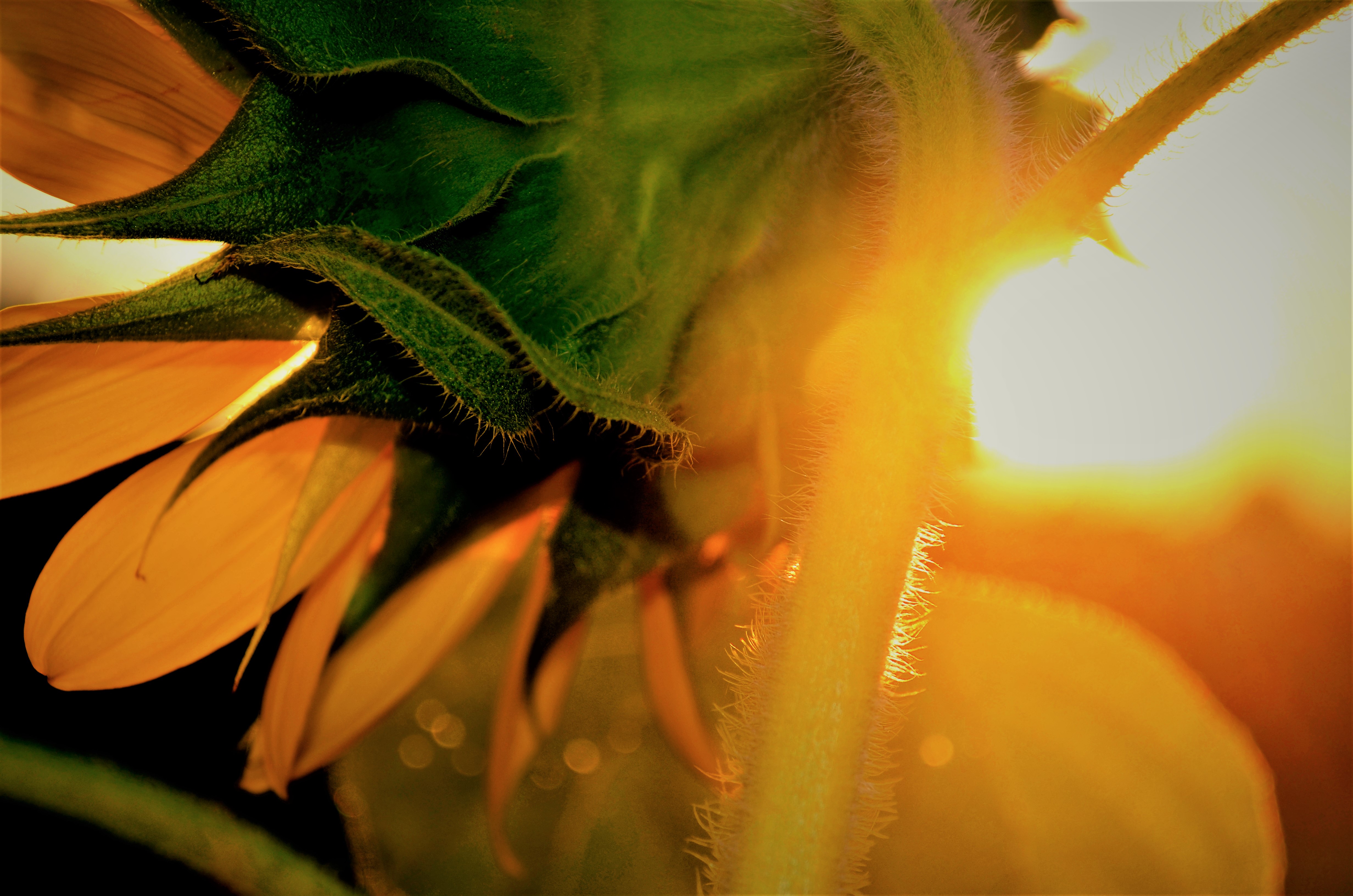
    The backyard where I’m living for now is large, but empty of trees, and the street beyond the fence is a busy suburban city street. There is no real ocean. Sometimes, though, above the fence, there are real fireworks. A streetlight guards high over the yard; I call it my moon. I’ve planted sunflowers, lit candles, burned incense. I’ve tried to embrace this odd place.

    The yard is surprisingly private, even serene. Although my senses are sparked ‒ occasionally tested when a motorcycle rages, when a concrete truck rattles ‒ I rest out here. I sit at my picnic table and watch all the lights. I think under my moon; when it rains, I listen to an ocean.

    In the early evening, before the sun sets beyond the street, in an instant, I can see both an entire car sliced up with fenceposts and only one split slice of it. A dual perspective. I asked for privacy in my temporary yard, that’s it, but have nonetheless received more than this.  

    Today I read a poem I’m going to frame and hang by the backyard door. It may not be as relevant wherever I take it to live next. But, like the fence, the poem will show me how to see better, to look through obstacle, to be a path, no matter where I am. It will remind me of the yard I dealt with, made the best of, and where I learned to better find lightness.

    Another beauty from Jane Hirshfield:


    THE SUPPLE DEER


    The quiet opening

    between fence strands

    perhaps eighteen inches.


    Antlers to hind hooves,

    four feet off the ground,

    the deer poured through.


    No tuft of the coarse white belly hair left behind.


    I don’t know how a stag turns

    into a stream, an arc of water.

    I have never felt such accurate envy.


    Not of the deer:


    To be that porous, to have such largeness pass through me.

    DSC_0607.jpga (2).jpg

  • WORLD OF SPHERES

    dsc_0154a-2

    Driving back from St. Louis, I noticed a sign advertising an “exclusive” neighborhood: lakeside chalets set apart from the surrounding communities. While the photo of the area looked rustic, wooded and serene, I couldn’t get past the word, exclusive. I thought of scarcity, something closed. Then I thought of its opposite: inclusive, abundance, something open. I prefer the second lifestyle.

    The OED definitions:

    Exclusive: Of a right, privilege, quality, etc.: possessed or enjoyed by the individuals specified and no others; confined or restricted…. Pursued, employed, etc. to the exclusion of all else; sole, only. Of a group, esp. a social circle, or a member of one: (excessively) reluctant to admit outsiders to membership. Of an establishment, etc.: used or patronized by a restricted (esp. aristocratic) social group….

    Inclusive: That includes, encloses, or contains; esp. that includes rather than excludes (also followed by of); including much or all… comprehensive.

    I see in the first definition how much the exclusions must be explained. More is required to state what exclusive omits than what inclusive embraces. The word exclusive is often used to describe something favorable, desired, a thing hunted and coveted. But I can’t shake the notion that to generate this desire, someone or something must be left out. That doesn’t sound fancy to me; it just sounds rude. I know some people disagree with me. To some, a new house or handbag or houndstooth-upholstered sports car shines better if it’s available only to a few. I don’t get it. And that’s okay.

    Since the exhausting Presidential campaign, election, and free-speech-limitations imposed by the new administration, I’ve also been considering the general definitions of the words conservative and liberal. I’m not talking about political definitions or job descriptions of each party. I’m not pitting one against the other. I’m simply considering what the words mean, how we use them in natural conversation. This contemplation helps me better grasp why we argue. It comes down, again, to perspective.

    More from the OED:

    Conservative: Characterized by a tendency to preserve or keep intact and unchanged; preservative (of)…. Characterized by caution, moderation, or reluctance to make changes; (of views, taste, etc.) ….

    Liberal: Directed to a general broadening of the mind…. Free in giving; generous, open-handed. Given or offered unstintingly, ample, lavish…. Unprejudiced, open-minded; esp. free from bigotry or unreasonable prejudice in favor of traditional opinions or established institutions, open to the reception of new ideas…. Favorable to or respectful of individual rights and freedoms….

    Here, when the focus of the explanation is to the extent something is ‒ or isn’t ‒ being offered or allowed to change, the definitions reflect the words’ meanings. The definition of conservative is significantly shorter than the definition of liberal. More is required to explain all that can be offered in a liberal sense than to discuss what is withheld in a conservative sense. This is not to say one is right and one is wrong, but it’s helpful to comprehend just how different the two mindsets are in processing and proceeding. It’s no wonder there’s so much tension.

    As I mentioned last month in my post, Eye on Eye, I’ve been having a tough time dealing with the arguments originating from ‒ or irritated by ‒ recent events. I’ve been trying to find peaceful, philosophical, psychological ways of understanding our differences and of communicating better. I’m not sure how much progress I’ve yet made, but I take some comfort in how hard I’ve tried. When looking to some poetry to pacify my brain, today I picked up A Book of Luminous Things: An International Anthology of Poetry, edited by Czeslaw Milosz. I opened to a poem I’d years ago dog-eared:


    MUSIC OF SPHERES

    -Jean Follain

    He was walking a frozen road

    in his pocket iron keys were jingling

    and with his pointed shoe absent-mindedly

    he kicked the cylinder

    of an old can

    which for a few seconds rolled its cold emptiness

    wobbled for a while and stopped

    under a sky studded with stars.

    -Translated from the French by Czeslaw Milosz and Robert Hass


    I appreciate the sudden liberation from a confined presence to a vast one. The keys in the beginning are heavy but small, held inside a pocket, and imply the person owns something and that he’s away from whatever that is. They begin to hint at a greater story. And the can, empty from use, represents the immediate, grounded experience that then bursts open a much larger scene: the earth’s small place in the cosmos. When that happens, the can, at first clunky in its prominence, becomes wonderfully microscopic. The cold, lone world is suddenly sparked warm with extraterrestrial light. It all comes together.

    Making connections is something I must do. Everything fits, makes better sense, in relation to something else. I know that’s not the only way to think. After all, it’s tiring, confusing, and heartbreaking. But it’s also illuminating and it creates new roads. The word exclusive halts me because it ends roads. I prefer inclusive living.

    The other day, I read a passage by Thich Nhat Hanh that applies here: “When the energy of anger serves ego, it is aggression. When it serves to ease others’ suffering and make the world a better place, it is wisdom.” The first type of anger is exclusive; the second is inclusive. So, I wish right now that we could grow outward as the poem grows. I wish we could look beyond ourselves more, collect and connect instead of divide and restrict. I wish we could be similarly aware, humble, reflective ‒ kicking a can, thinking of the can and of everything but the can. I wish for a humanity with perspective, each life certain of others’ lives like stars: out there, right there, even if one doesn’t always know or see them. I hope for a comprehensive world, one that includes and gives, that encourages new ideas. I hope for a world that doesn’t close, that opens.

  • EDDIE CHEDDAR, Year Three

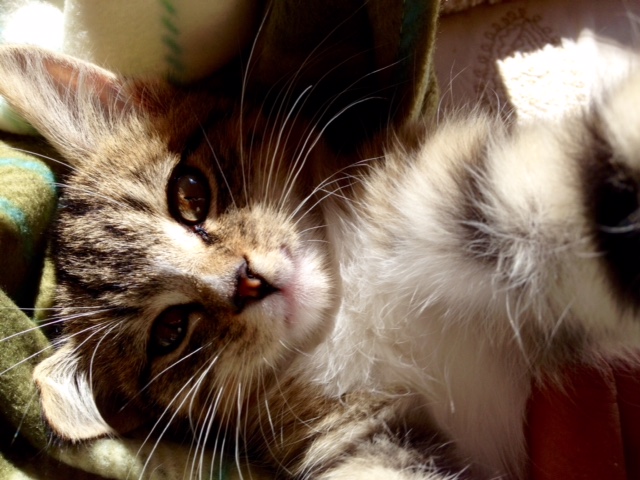
    andrew-birdThree years ago last night, or sometime before that night, someone, in the company of an adorable, tiny, filthy, ear-mite-ridden, wounded-lip kitten, left that kitten – the veterinarian would later presume − in front of a neighborhood. The kitten spent at least Halloween night on his own in a world full of cars and kids and hawks and owls and coyotes.

    Three years ago tonight, as I was enjoying “20,” the Pearl Jam documentary, I decided to grab one last bottle of wine from the garage refrigerator. I opened the door and, on the step looking up at me was a small feline face − all eyes and ears. Startled, the kitten ran. I couldn’t find him. So I left a pillow case for him to sleep on and a small dish each of food and water, and I hoped I’d see him again the next day.

    The following morning, I got out of bed like it was a childhood Christmas. I quietly and slowly opened the door. That immediately loveable face raised from his curled-up place on the pillowcase, and he looked up at me. He’d finished all the food and water. I was so happy.

    After a morning of searching for the kitten in between shelves, and freeing him from a kayak he explored and got stuck in, the little guy gradually lost his fear. I started calling him Little Buddy. By that afternoon, the kitten let me feed him from my hand and pick him up and hold him close inside my jean jacket. I named him Eddie. Sometime soon later, after I’d taken him in the house to live, while treating him to a cheese snack, I further named him Eddie Cheddar.

    Three years later, I’m still taking joy in taking care of Eddie. And from his excited-chirp morning greetings to his Mickey Mouse paws blanket-kneading purrs before sleep, he also takes care of me. Eddie’s funny. He demolishes toys meant for German Shepherds. He chases wadded-up tinfoil scraps, and wine corks, blush brushes, and tennis balls. He plays with lettuce leaves. He anchors a leaf to the counter and chews it down like a dog would a bone.

    Eddie dances with herb sprigs. When I place a stem of rosemary or parsley in his water bowl, Eddie picks up the botanical toy with his teeth and then jumps, the sprig like a mouse in his mouth. He loves snacks of Parmesan cheese, smoked turkey, Cheerios and bacon bits. All I have to do is pay attention to what Eddie pays attention to, and new toys and treats for him reveal themselves to me. He’s just good at letting me take care of him.

    Lately, Eddie asks for a daily bath. Sometimes, when I shower twice, he asks twice. Each morning or evening, after I turn off the water, as I step out of the shower, Eddie appears in front of the bathroom door. He waits until I walk toward him and I squeeze my wet hair on his back, and then I pet him. I tell Eddie what a good boy he is, and he chirps and makes all sorts of playful, happy animal words. I dry him with a washcloth. Then Eddie rests on the floor and continues his bathing more cat-like, methodical, his fur in small, damp mohawks and scruffs.

    Some days when I open the utility room door to leave the house, Eddie hops on top of the washing machine. I offer him a handful of catnip treats. As I close the door, Eddie tilts his face, fitting as much as I can see of him – those eyes he’s grown into − as he can in that space.

    Every day, Eddie makes me laugh, and, now as I read to him, think about how complexity works. I’m both confounded by − but also thankful for − some stranger or couple or group of strangers who abandoned a kitten. The exact same act did two simple things: it endangered a new and vulnerable life − and fed one.  -November 2016

  • EYE ON EYE

    andrew-bird

    After an extra slippery shower soap went on a sudden journey knocking over a liter of shampoo onto my foot, for the past two weeks I’ve had a very sore toe. I can move it, so I don’t think it’s broken, but it’s whatever is closest to that, because it hurts. I’ve tried to stay off it within reason of normal everyday activity, and I’ve tried ice and heat and taping it and so on, but I think it’s just going to take a few more weeks to fully heal. So meanwhile, I’m way more aware of my steps.

    In that time of further self-awareness, and sometimes not walking, I’ve been reading a lot. One of the books I’ve been reading is The Happiness Hypothesis by Jonathan Haidt. The basic premise, so far, is the more we can learn about the nature of our brain ‒ how it biologically works and responds to things, how it’s fundamentally motivated ‒ the better we can understand our actions and how to improve those actions. In that way, we can live a happier, less deluded life. This seems kind of like paying more attention to my steps ‒ how I’ve gotten from one place to another by noticing, along the way, how I got there.

    These ideas seem especially important right now as Americans debate where we are, and express whether that atmosphere is one that enrages or comforts us. As during the campaign, I’ve noticed a lot of debates that seem to be mostly two sets of talking points, with no listening or real conversation taking place. I think one reason for this is, in political debates, something is missing between the two ‘sides.’ There’s a decided lack of empathy.

    Normally, I suffer from a fault-level crushing amount of empathy. It makes noticing a lack of it that much more troubling. I genuinely want to leave a conversation feeling like I’ve gotten closer to a person, not further away. That has been a difficult task lately. I’ve participated in some discussions in which, after I’ve tried to offer a peaceful (albeit different) viewpoint, I’ve been lashed out at with topics I didn’t even address. It’s left me disappointed, head shaking, thinking, What the hell just happened?

    If I’d gone into the discussions throwing my fists, I’d understand those reactions. But I hate fighting with anyone. Fighting for something, yes, that feels strong and good. But fighting against something ‒ the brand of fighting that seems to be happening more than the other kind right now ‒ is tough. It drains life. Reflecting on some of the tougher conversations lately, I’ve been thinking I’ve either chosen the wrong discussions, or that I was more forceful than I intended to be. Today, as I read Haidt’s book, I’m thinking it’s a little of both.

    I’ll say it right here. I am a colossal fan of Barack Obama. I don’t memorize details regarding this policy here or that order there. Why I appreciate him is not technical; it’s behavioral. President Obama held his office in an intelligent, thoughtful, calm, healthfully confident, compassionate, empathetic manner. His  example of how to deal with tough topics, people, and actions was a gift. He was empathetic. If he (or someday, she) is to lead a country of people, how can a President do that without empathy?

    The reason I mention any of this is, if a different Republican candidate had been nominated, I doubt I’d have even considered some of the debates I hesitantly or with gusto entered. Yes, I’d love a woman to be elected President. So, I’d have debated to further that cause, to support. But because of who was nominated to be the Republican candidate ‒ because of the lack of empathy he’s so far displayed ‒ I entered many conversations I otherwise might not have not only to support one candidate, but to also to argue against his cause.

    That right there goes against my nature. Or it goes against what I perceive is my nature.

    I’m thinking now as I have before, maybe in some cases I’m not acting the way I mean to. I’m fully aware when I see someone throwing punches with no regard for where those land that it’s harmful. I hope I don’t act like that. But how can I really know my own nature if I’m so close to it?

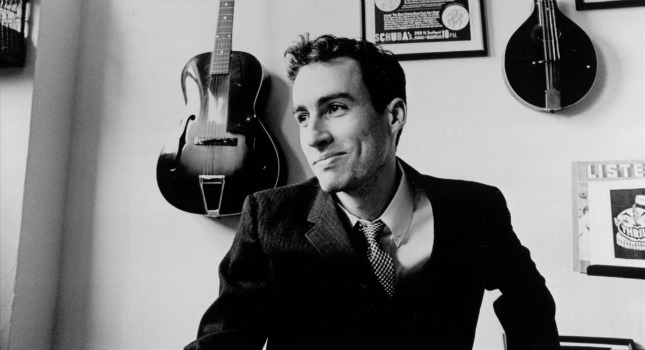
    Last week I saw a mesmerizing show by the musician Andrew Bird. I’d enjoyed his music for years, but hadn’t yet seen him perform. As tends to happen with good shows, after watching and listening to him play the music, right in front of me, I’m a bigger fan. He’s a passionate musician. Before the show, just to learn a little more about him, I watched part of a TED Talk he’d done in 2010. He brought up a song, about feedback loops, he was working on and hadn’t yet been able to finish:

    I’m kind of hoping some conversations here might help me finish it. Because it gets into all sorts of crazy realms. And so this is basically a song about loops, but not the kind of loops that I make up here. They’re feedback loops. And in the audio world that’s when the microphone gets too close to its sound source, and then it gets in this self-destructive loop that creates a very unpleasant sound….

    And I’ve been thinking about how that applies across a whole spectrum of realms, from, say, the ecological…. There seems to be a rule in nature that if you get too close to where you came from, it gets ugly. So like, you can’t feed cows their own brains or you get mad cow disease, and inbreeding and incest and, let’s see, what’s the other one? Biological — there’s autoimmune diseases, where the body attacks itself a little too overzealously and destroys the host, or the person. And then — okay, this is where we get to the song — kind of bridges the gap to the emotional.

    Because although I’ve used scientific terms in songs, it’s very difficult sometimes to make them lyrical. And there’s some things you just don’t need to have in songs. So I’m trying to bridge this gap between this idea and this melody. And so, I don’t know if you’ve ever had this, but when I close my eyes sometimes and try to sleep, I can’t stop thinking about my own eyes. And it’s like your eyes start straining to see themselves. That’s what it feels like to me. It’s not pleasant. I’m sorry if I put that idea in your head. It’s impossible, of course, for your eyes to see themselves, but they seem to be trying. So that’s getting a little more closer to a personal experience. Or ears being able to hear themselves — it’s just impossible. That’s the thing. So, I’ve been working on this song that mentions these things and then also imagines a person who’s been so successful at defending themselves from heartbreak that they’re left to do the deed themselves, if that’s possible. And that’s what the song is asking. All right. It doesn’t have a name yet.


    So, Bird hoped that by talking about this and then playing the part of the song he had so far completed, and then engaging with the audience a bit, the experience might free up where the song was headed. He needed to somehow get outside of the song to re-enter it, to complete it, to pay attention differently to how he was moving forward, to be aware of his steps, but not in the same way he had been.

    I think one reason political debates get so out of hand is that we’re too close to them. We already, daily, have real, consistent issues understanding that the world is not exactly how we perceive it ‒ how could it be both the way I see it and the way someone who completely disagrees with me sees it? ‒ so in a political debate that skill we haven’t (collectively) yet mastered makes the whole process break down that much faster. We’re  too close to ourselves.

    In The Happiness Hypothesis, that I’ve been reading more of since my idiotic self injury, Haidt talks about how the perspective problem happens and affects relationships and creates tension. He started learning this in his first year in college:

    I fought endlessly with my first-year college roommates. I had provided much of our furniture, including the highly valued refrigerator, and I did most of the work keeping our common space clean. After a while, I got tired of doing more than my share. I stopped working so hard and let the space become messy so that someone else would pick up the slack. Nobody did. But they did pick up my resentment, and it united them in their dislike of me. The next year, when we no longer lived together, we became close friends.

    When my father drove me and my refrigerator up to college that first year, he told me that the most important things I was going to learn I would not learn in the classroom, and he was right. It took many more years of living with roommates, but I finally realized what a fool I had made of myself that first year. Of course I thought I did more than my share. Although I was aware of every little thing I did for the group, I was aware of only a portion of everyone else’s contributions. And even if I had been correct in my accounting, I was self-righteous in setting up the accounting categories. I picked the things I cared about ‒ such as keeping the refrigerator clean ‒ and then gave myself an A-plus in that category. As with other kinds of social comparison, ambiguity allows us to set up the comparison in ways that favor ourselves, and then to seek evidence that shows we are excellent co-operators. Studies of such ‘unconscious overclaiming’ show that when husbands and wives estimate the percentage of housework each does, their estimates total more than 120 percent. When MBA students in a work group make estimates of their contributions to the team, the estimates total 139 percent. Whenever people form cooperative groups, which are usually of mutual benefit, self-serving biases threaten to fill group members with mutual resentment.

    Haidt summarizes by discussing research done by Emily Pronin at Princeton and Lee Ross at Stanford on this unfortunate phenomenon of over-simplifying and over-prioritizing our world view, what they’ve called our “naïve realism.” Haidt explains:

    Each of us thinks we see the world directly, as it really is. We further believe that the facts as we see them are there for all to see, therefore others should agree with us. If they don’t agree, it follows either that they have not yet been exposed to the relevant facts or else that they are blinded by their interests and ideologies….

    If I could nominate one candidate for ‘biggest obstacle to world peace and social harmony,’ it would be naïve realism because it is so easily ratcheted up from the individual to the group level: My group is right because we see things as they are. Those who disagree are obviously biased by their religion, their ideology, or their self-interest. Naïve realism gives us a world full of good and evil, and this brings us to the most disturbing implication of the sages’ advice about hypocrisy: Good and evil do not exist outside of our beliefs about them.

    So, in this extra tense time right now when each of us thinks we know at least in some part what’s beneficial or not for the rest of our world (or that’s the perspective I’m coming from), maybe it would help to think of these studies and anecdotes and meditations and epiphanies of Haidt’s. Sure, we can still develop and hold and express our opinions. But when expressing those opinions, it might be good to stop once in a while.

    It might be good to remember something so obvious we tend to either not think of or forget that we ever have thought of: the world looks different to a person nine states away, and to a person standing right next to me, than it does to me. That doesn’t mean one of us is right and one of us is wrong. It simply means we’re each living in a different version of the same world. Thought of that way, it’s marvelous to think of the community we do have, and at least to me today, a tiny bit easier to stay positive and strong and peaceful in the times in which we argue.

    It helped Andrew Bird to get outside his own creation, to open his world to others and let others enter his. But first he had to pay attention to the fact that he had been suffering trying to see his own eyes; he had to be aware of how he was limiting himself. In a way, he’d been breaking his own heart. He’d been disabling himself from accomplishing what he loves: to create and share. That process of self-realization and letting go, stepping forward with a better educated self awareness, helped new thoughts form and grow. I know this because he finished the song, “Eyeoneye;” it’s on his album, “Break It Yourself,” that he released two years later. I hope he’s slept better since.


  • REASONABLE HOPE

    dsc_0432-jpga-2

     In a conversation recently, I brought up my sadness over the upcoming change in this country’s leadership. This isn’t about politics; more, it’s about atmosphere. The woman I was talking with shares that sadness, and we discussed how to handle it. She suggested that instead of being sorrowful for the way the impending leader has represented himself, we do all we can to keep sharing and spreading kindness. This kind of thinking provides a small amount of peace. Rather than feeling stuck in the middle of an unpleasant situation, I can focus on what I can control. I can keep my atmosphere educated and uplifted.

    So, I’ve been reading poems. The following poem gives me a breath of optimism that being hopeful right now is reasonable. I need to think this way. So, I’ll carry on and I’ll create, marvel, share, dream, try, and try harder, and make and meet goals. I’ll mess up. I’ll work harder to not mess up. I’ll stay concerned and hurt for anyone who suffers. I’ll empathize and help and look out for others. I’ll celebrate others’ happiness, and, sometimes, I will simply be happy. The work of change is rough. It feels more like a mess of vines than an effortless opening. But it is appealing to continue reaching for the space where the poem leaves us, a place that is vibrant, granular, and as relevant now as ever.


    THE DOOR

    -Jane Hirshfield


    A note waterfalls steadily

    through us,

    just below hearing.


    Or this early light

    streaming through dusty glass:

    what enters, enters like that,

    unstoppable gift.


    And yet there is also the other,

    the breath-space held between any call

    and its answer ‒


    in the querying

    first scuff of footstep,

    the wood owls’ repeating,

    the two-counting heart:


    A little sabbath,

    minnow whose brightness silvers past time.


    The rest-note,

    unwritten,

    hinged between worlds,

    that precedes change and allows it.


  • A SNOWFLAKE IS A MINERAL

    Last winter, I decided to find out how a snowflake forms. So fantastical, when immersed in a cloud of bright gray, to suddenly notice a single crystal, and then another, and see how the two are so alike and yet not at all the same. A snowflake, as it turns out, is a mineral. It builds itself around a particle of dust or pollen. When water vapor collects around the particle, and freezes, that combination makes an ice crystal. The process continues as the snowflake falls, and the freezing sequence, always hexagonal, repeats, making the snowflake larger and larger. Each snowflake is similarly shaped and formed but ‒ since each descends through a slightly different atmosphere ‒ is distinct. Each snowflake comes from the grit of some spent place or being, and grows into a new beauty.

    This winter, after the second snowfall of the season, I read again about snowflake formation; and I’m struck by a more extensive marveling. It seems to me all creatures are comparably formed. We are as basically, exceptionally shaped. Each species grows in a like manner. As humans that means we become our basic body of head, arms, torso, and legs. Due, however, to variances in the dust and pollen that started the process, and to the variety of ways we each travel into being through a singular atmosphere, every one of a species is unique.

    On Earth, all humans look like humans, but no human looks just like any other human. I’m curious, then, why the concept that every snowflake is singular, unrepeatable, so fascinates and floors us. We, also, together, appear similar, but from individual to individual, we differ. We collect, and accumulate, and cover; and we disappear. Something, though, of each of us stays in the atmosphere. What we made or said or how we made others feel; some source remains as dust or pollen and begins forming something else ‒ a movement, a tradition, a motivation, a thought ‒ as markedly different from any other crystal of creation.

    For years, I’ve been troubled by the snow ‒ not the snow itself but the sometimes dangerous, shooting ache of cold that accompanies it ‒ and how snowfall seems to mute sound, and dampen light, and with method hide living things. How most creatures exposed to long episodes of snow survive by being dormant. I have enjoyed the novelty of a snowfall and the way, during one, the world both rushes outside and tucks itself in. And I’ve appreciated an obvious peace in the world around me ‒ whole and unified under the wrap of snow. But that serenity, what I perceived as a lack of vitality, somehow down deep saddened me. Today, four decades into life, snow has shown me something new. Snowflakes are revival, regeneration, earthly stardust. Snowflakes are life crystals. DSC_0459 (2).JPG

  • NEW YEAR

    That was a damn tough year. I’m trying to think of the parts that weren’t tough, and to understand that the hard parts helped me grow and learn. I wrote poems, not many, but more than I wrote the past few years. I cooked a lot and made up new recipes, and tried others’ recipes. I tried to feed people well. I kept myself healthy with 3, 147 miles on my bike and spin bike and trainer. I rode my longest ride to date at just over 50 miles, and it wasn’t nearly as difficult as I thought it might be. I calmed and strengthened myself with hours of Pilates. I donated my time and heart and energy to help people. I dealt with lots of difficulty and learned more and more about how to cope – and to take care of myself better while trying to improve a negative situation. I painted a little. I took photos. I traveled to some places I hadn’t traveled to before, and spent an afternoon wading in a mountain stream. I met a rock star while she was DJing. I saw (and heard) loads of music shows. And with help and on my own I found extraordinary music to listen to anytime to enhance living. I read more books this year than I did the past year or so, including Buddhism-related books – new territory that also feels like it’s been inside me all along – for which I’m deeply grateful. And I’m thankful for all the poetry manuscripts I read and loved that hopefully will be published someday. These books helped me charge my brain which helps me charge the rest of everything. I researched new topics. I debated (sometimes peacefully). I tried to listen and understand. I met new friends and got back in touch with older friends. I cried almost every day; but that means I care intensely and feel to the point it’s near unbearable. I also laughed and breathed deeply and I sweat and smiled and focused and planned and remembered and I hoped. I took care of a furry, zany creature who when lost found me to live with; and I giggled and snuggled with him and was thankful every day for his companionship. The best parts of the year were basic just like that. The tough parts made the better parts glow in gratitude. I’m hopeful the warmer moments of 2017 will be more in number and less hard-fought so I can work harder to find my purpose. I hope I help others to be happy; I don’t even need to know if I do but I hope I help any joy I earn grow from the roots and spread in the world like spring-vibrant ground cover. I hope we all suffer less and thrive more. I hope we create peace. Happy New Year, 2017.


    dsc_0122-jpga


  • PARTICLES TO WAVES: New Blog Project

    dsc_1175-2The name, Particles to Waves, refers to an excerpt from Annie Dillard’s Pilgrim at Tinker Creek: “Here is the word from a subatomic physicist: ‘Everything that has already happened is particles, everything in the future is waves.’”