“We have no idea what we don’t know, or what we’ll eventually learn, or what might be true despite our perpetual inability to comprehend what that truth is.”
-But What If We’re Wrong?: Thinking About the Present as If It Were the Past by Chuck Klosterman
That statement might seem gloomy to some, but I find it intellectually exhilarating. It says to me: We can ‒ we get to ‒ learn so much more than we think we know! Klosterman’s idea in “But What If We’re Wrong?” is that our reality can’t possibly be exactly as we perceive it; there might be, and likely are, aspects of our reality construction that we can’t yet even imagine to question, let alone understand.
He opens the book discussing gravity, summarizing the drastic changes in our understanding of it: from Aritstotle ‒ who “believed all objects craved their ‘natural place… that a dropped rock fell to the earth because rocks belonged on earth and wanted to be there” ‒ to Newton to Einstein to quantum mechanics and string theory and so on. According to the theoretical physicist Brian Greene: “’There is a very, very good chance that our understanding of gravity will not be the same in five hundred years. In fact, that’s the one arena where I would think that most of our contemporary evidence is circumstantial, and that the way we think about gravity will be very different.’” Some contemporary scientists, Klosterman says, “suspect gravity might not even be a fundamental force, but an emergent force.”
He explains (this information, as huge as it is, exists as a footnote):
This means that gravity might just be a manifestation of other forces ‒ not a force itself, but the peripheral result of something else. Greene’s analogy was the idea of temperature: Our skin can sense warmth on a hot day, but ‘warmth’ is not some independent thing that exists on its own. Warmth is just the consequence of invisible atoms moving around very fast, creating the sensation of temperature. We feel it, but it’s not really there. So if gravity were an emergent force, it would mean that gravity isn’t the central power pulling things to the Earth, but the tangential consequence of something else we can’t yet explain. We feel it, but it’s not there. It would almost make the whole idea of ‘gravity’ a semantic construction.
So, what if our current understanding of gravity ends up as footnote in a future definition? That would mean one of our most non-controversial perceptions of how we go about on earth might be off balance. Klosterman asks an obvious and deep-thought-causing question: “If mankind could believe something false was objectively true for two thousand years, why do we reflexively assume that our current understanding of gravity ‒ which we’ve embraced for a mere three hundred fifty years ‒ will somehow exist forever?”
I ask a similar, broader, non-gravity-specific question all the time, about everything: We’ve been wrong about so much, so why should we think we’re right now? While the constant questioning sometimes shortens my sleep, and lengthens my daydreams, I keep asking. It’s a steady way to progress. We didn’t know, we learned, we think we know, we’ll keep learning, we’ll know more, and so on. I can’t think of a better, more productive, open-minded way to think.
Klosterman applies the gravity question to many topics throughout the rest of the book, from literature, to television, politics, the movie “The Matrix” (it’s about more than you thought), conspiracy theories (a section that contains one of my favorite lines, “Metaphoric sheep get no love.”), false memories, life after death, the Internet, history itself. Lots of fascinating ideas.
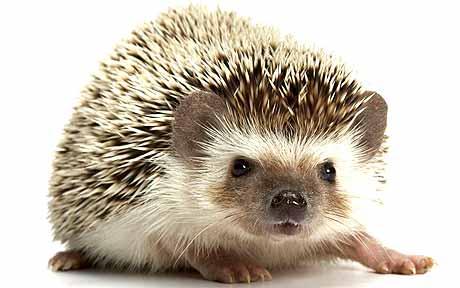
One of my favorite parts of the book, though, is really simple. It’s a story about when Klosterman lived, after college and before moving to New York, for four years in Ohio. He was writing, drinking, single, and spending some of his evenings on his balcony ‒ watching a hedgehog.
The view from my Akron apartment faced the back of the building. There was an apple tree in the yard, and the (comically obese) hedgehog would sit underneath its branches and longingly stare at the low-hanging fruit. It often seemed like he was torturing himself, because there was no way a hedgehog of his ample girth could reach an apple two feet above his head. Yet every time he did this, he knew what he was doing. Every time, or at least every time I happened to be watching, an apple would eventually fall to the ground, and he would waddle over and eat it. He was a brilliant goddamn hedgehog. I couldn’t stop thinking about it.
From what I gather, the hedgehog had learned, probably from sitting under the apple tree many times, that an apple will fall. And when the apple falls, the hedgehog can eat. While Klosterman doesn’t define this story the way I’m about to, I hope it’s alright to take the information and come to some of my own additional conclusions, towards future conclusions.
Seen one way, the hedgehog has learned to await an upcoming occurrence; he’s learned to anticipate the future. In this sense, the hedgehog represents an appreciation for current knowledge, for information we’ve collected before now, through now. Though we have so much to learn, we can take some temporary comfort in where we stand in the process, if we’ve worked through the process to get here.
Seen another way, the hedgehog has learned that eventually the present will be the past. This way, the hedgehog represents the place of now in the future. Now is about to stop being now, at least not as it is now. Not to make the hedgehog metaphor too weighty, this simply means, in this case, that to the hedgehog, at some point the waiting will be over. The apple will be in his temporarily satisfied stomach. And then he’ll wait some more, and he’ll keep eating.
So, what if the apple here is knowledge?
I think it is, and then I agree. That’s one brilliant goddamn hedgehog.
 PARTICLES to WAVES
Leave a comment