After an extra slippery shower soap went on a sudden journey knocking over a liter of shampoo onto my foot, for the past two weeks I’ve had a very sore toe. I can move it, so I don’t think it’s broken, but it’s whatever is closest to that, because it hurts. I’ve tried to stay off it within reason of normal everyday activity, and I’ve tried ice and heat and taping it and so on, but I think it’s just going to take a few more weeks to fully heal. So meanwhile, I’m way more aware of my steps.
In that time of further self-awareness, and sometimes not walking, I’ve been reading a lot. One of the books I’ve been reading is The Happiness Hypothesis by Jonathan Haidt. The basic premise, so far, is the more we can learn about the nature of our brain ‒ how it biologically works and responds to things, how it’s fundamentally motivated ‒ the better we can understand our actions and how to improve those actions. In that way, we can live a happier, less deluded life. This seems kind of like paying more attention to my steps ‒ how I’ve gotten from one place to another by noticing, along the way, how I got there.
These ideas seem especially important right now as Americans debate where we are, and express whether that atmosphere is one that enrages or comforts us. As during the campaign, I’ve noticed a lot of debates that seem to be mostly two sets of talking points, with no listening or real conversation taking place. I think one reason for this is, in political debates, something is missing between the two ‘sides.’ There’s a decided lack of empathy.
Normally, I suffer from a fault-level crushing amount of empathy. It makes noticing a lack of it that much more troubling. I genuinely want to leave a conversation feeling like I’ve gotten closer to a person, not further away. That has been a difficult task lately. I’ve participated in some discussions in which, after I’ve tried to offer a peaceful (albeit different) viewpoint, I’ve been lashed out at with topics I didn’t even address. It’s left me disappointed, head shaking, thinking, What the hell just happened?
If I’d gone into the discussions throwing my fists, I’d understand those reactions. But I hate fighting with anyone. Fighting for something, yes, that feels strong and good. But fighting against something ‒ the brand of fighting that seems to be happening more than the other kind right now ‒ is tough. It drains life. Reflecting on some of the tougher conversations lately, I’ve been thinking I’ve either chosen the wrong discussions, or that I was more forceful than I intended to be. Today, as I read Haidt’s book, I’m thinking it’s a little of both.
I’ll say it right here. I am a colossal fan of Barack Obama. I don’t memorize details regarding this policy here or that order there. Why I appreciate him is not technical; it’s behavioral. President Obama held his office in an intelligent, thoughtful, calm, healthfully confident, compassionate, empathetic manner. His example of how to deal with tough topics, people, and actions was a gift. He was empathetic. If he (or someday, she) is to lead a country of people, how can a President do that without empathy?
The reason I mention any of this is, if a different Republican candidate had been nominated, I doubt I’d have even considered some of the debates I hesitantly or with gusto entered. Yes, I’d love a woman to be elected President. So, I’d have debated to further that cause, to support. But because of who was nominated to be the Republican candidate ‒ because of the lack of empathy he’s so far displayed ‒ I entered many conversations I otherwise might not have not only to support one candidate, but to also to argue against his cause.
That right there goes against my nature. Or it goes against what I perceive is my nature.
I’m thinking now as I have before, maybe in some cases I’m not acting the way I mean to. I’m fully aware when I see someone throwing punches with no regard for where those land that it’s harmful. I hope I don’t act like that. But how can I really know my own nature if I’m so close to it?
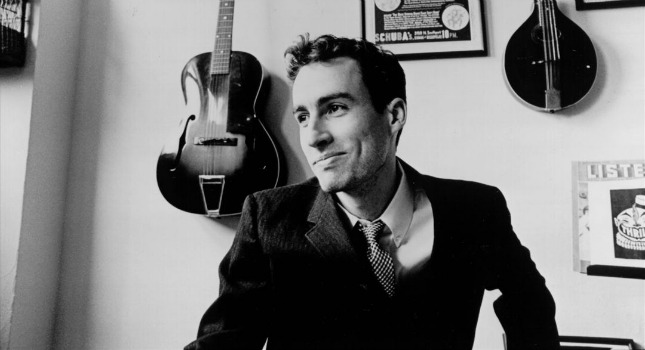
Last week I saw a mesmerizing show by the musician Andrew Bird. I’d enjoyed his music for years, but hadn’t yet seen him perform. As tends to happen with good shows, after watching and listening to him play the music, right in front of me, I’m a bigger fan. He’s a passionate musician. Before the show, just to learn a little more about him, I watched part of a TED Talk he’d done in 2010. He brought up a song, about feedback loops, he was working on and hadn’t yet been able to finish:
I’m kind of hoping some conversations here might help me finish it. Because it gets into all sorts of crazy realms. And so this is basically a song about loops, but not the kind of loops that I make up here. They’re feedback loops. And in the audio world that’s when the microphone gets too close to its sound source, and then it gets in this self-destructive loop that creates a very unpleasant sound….
And I’ve been thinking about how that applies across a whole spectrum of realms, from, say, the ecological…. There seems to be a rule in nature that if you get too close to where you came from, it gets ugly. So like, you can’t feed cows their own brains or you get mad cow disease, and inbreeding and incest and, let’s see, what’s the other one? Biological — there’s autoimmune diseases, where the body attacks itself a little too overzealously and destroys the host, or the person. And then — okay, this is where we get to the song — kind of bridges the gap to the emotional.
Because although I’ve used scientific terms in songs, it’s very difficult sometimes to make them lyrical. And there’s some things you just don’t need to have in songs. So I’m trying to bridge this gap between this idea and this melody. And so, I don’t know if you’ve ever had this, but when I close my eyes sometimes and try to sleep, I can’t stop thinking about my own eyes. And it’s like your eyes start straining to see themselves. That’s what it feels like to me. It’s not pleasant. I’m sorry if I put that idea in your head. It’s impossible, of course, for your eyes to see themselves, but they seem to be trying. So that’s getting a little more closer to a personal experience. Or ears being able to hear themselves — it’s just impossible. That’s the thing. So, I’ve been working on this song that mentions these things and then also imagines a person who’s been so successful at defending themselves from heartbreak that they’re left to do the deed themselves, if that’s possible. And that’s what the song is asking. All right. It doesn’t have a name yet.
So, Bird hoped that by talking about this and then playing the part of the song he had so far completed, and then engaging with the audience a bit, the experience might free up where the song was headed. He needed to somehow get outside of the song to re-enter it, to complete it, to pay attention differently to how he was moving forward, to be aware of his steps, but not in the same way he had been.
I think one reason political debates get so out of hand is that we’re too close to them. We already, daily, have real, consistent issues understanding that the world is not exactly how we perceive it ‒ how could it be both the way I see it and the way someone who completely disagrees with me sees it? ‒ so in a political debate that skill we haven’t (collectively) yet mastered makes the whole process break down that much faster. We’re too close to ourselves.
In The Happiness Hypothesis, that I’ve been reading more of since my idiotic self injury, Haidt talks about how the perspective problem happens and affects relationships and creates tension. He started learning this in his first year in college:
I fought endlessly with my first-year college roommates. I had provided much of our furniture, including the highly valued refrigerator, and I did most of the work keeping our common space clean. After a while, I got tired of doing more than my share. I stopped working so hard and let the space become messy so that someone else would pick up the slack. Nobody did. But they did pick up my resentment, and it united them in their dislike of me. The next year, when we no longer lived together, we became close friends.
When my father drove me and my refrigerator up to college that first year, he told me that the most important things I was going to learn I would not learn in the classroom, and he was right. It took many more years of living with roommates, but I finally realized what a fool I had made of myself that first year. Of course I thought I did more than my share. Although I was aware of every little thing I did for the group, I was aware of only a portion of everyone else’s contributions. And even if I had been correct in my accounting, I was self-righteous in setting up the accounting categories. I picked the things I cared about ‒ such as keeping the refrigerator clean ‒ and then gave myself an A-plus in that category. As with other kinds of social comparison, ambiguity allows us to set up the comparison in ways that favor ourselves, and then to seek evidence that shows we are excellent co-operators. Studies of such ‘unconscious overclaiming’ show that when husbands and wives estimate the percentage of housework each does, their estimates total more than 120 percent. When MBA students in a work group make estimates of their contributions to the team, the estimates total 139 percent. Whenever people form cooperative groups, which are usually of mutual benefit, self-serving biases threaten to fill group members with mutual resentment.
Haidt summarizes by discussing research done by Emily Pronin at Princeton and Lee Ross at Stanford on this unfortunate phenomenon of over-simplifying and over-prioritizing our world view, what they’ve called our “naïve realism.” Haidt explains:
Each of us thinks we see the world directly, as it really is. We further believe that the facts as we see them are there for all to see, therefore others should agree with us. If they don’t agree, it follows either that they have not yet been exposed to the relevant facts or else that they are blinded by their interests and ideologies….
If I could nominate one candidate for ‘biggest obstacle to world peace and social harmony,’ it would be naïve realism because it is so easily ratcheted up from the individual to the group level: My group is right because we see things as they are. Those who disagree are obviously biased by their religion, their ideology, or their self-interest. Naïve realism gives us a world full of good and evil, and this brings us to the most disturbing implication of the sages’ advice about hypocrisy: Good and evil do not exist outside of our beliefs about them.
So, in this extra tense time right now when each of us thinks we know at least in some part what’s beneficial or not for the rest of our world (or that’s the perspective I’m coming from), maybe it would help to think of these studies and anecdotes and meditations and epiphanies of Haidt’s. Sure, we can still develop and hold and express our opinions. But when expressing those opinions, it might be good to stop once in a while.
It might be good to remember something so obvious we tend to either not think of or forget that we ever have thought of: the world looks different to a person nine states away, and to a person standing right next to me, than it does to me. That doesn’t mean one of us is right and one of us is wrong. It simply means we’re each living in a different version of the same world. Thought of that way, it’s marvelous to think of the community we do have, and at least to me today, a tiny bit easier to stay positive and strong and peaceful in the times in which we argue.
It helped Andrew Bird to get outside his own creation, to open his world to others and let others enter his. But first he had to pay attention to the fact that he had been suffering trying to see his own eyes; he had to be aware of how he was limiting himself. In a way, he’d been breaking his own heart. He’d been disabling himself from accomplishing what he loves: to create and share. That process of self-realization and letting go, stepping forward with a better educated self awareness, helped new thoughts form and grow. I know this because he finished the song, “Eyeoneye;” it’s on his album, “Break It Yourself,” that he released two years later. I hope he’s slept better since.

 PARTICLES to WAVES
Leave a comment