
Last winter, I decided to find out how a snowflake forms. So fantastical, when immersed in a cloud of bright gray, to suddenly notice a single crystal, and then another, and see how the two are so alike and yet not at all the same. A snowflake, as it turns out, is a mineral. It builds itself around a particle of dust or pollen. When water vapor collects around the particle, and freezes, that combination makes an ice crystal. The process continues as the snowflake falls, and the freezing sequence, always hexagonal, repeats, making the snowflake larger and larger. Each snowflake is similarly shaped and formed but ‒ since each descends through a slightly different atmosphere ‒ is distinct. Each snowflake comes from the grit of some spent place or being, and grows into a new beauty.
This winter, after the second snowfall of the season, I read again about snowflake formation; and I’m struck by a more extensive marveling. It seems to me all creatures are comparably formed. We are as basically, exceptionally shaped. Each species grows in a like manner. As humans that means we become our basic body of head, arms, torso, and legs. Due, however, to variances in the dust and pollen that started the process, and to the variety of ways we each travel into being through a singular atmosphere, every one of a species is unique.
On Earth, all humans look like humans, but no human looks just like any other human. I’m curious, then, why the concept that every snowflake is singular, unrepeatable, so fascinates and floors us. We, also, together, appear similar, but from individual to individual, we differ. We collect, and accumulate, and cover; and we disappear. Something, though, of each of us stays in the atmosphere. What we made or said or how we made others feel; some source remains as dust or pollen and begins forming something else ‒ a movement, a tradition, a motivation, a thought ‒ as markedly different from any other crystal of creation.
For years, I’ve been troubled by the snow ‒ not the snow itself but the sometimes dangerous, shooting ache of cold that accompanies it ‒ and how snowfall seems to mute sound, and dampen light, and with method hide living things. How most creatures exposed to long episodes of snow survive by being dormant. I have enjoyed the novelty of a snowfall and the way, during one, the world both rushes outside and tucks itself in. And I’ve appreciated an obvious peace in the world around me ‒ whole and unified under the wrap of snow. But that serenity, what I perceived as a lack of vitality, somehow down deep saddened me. Today, four decades into life, snow has shown me something new. Snowflakes are revival, regeneration, earthly stardust. Snowflakes are life crystals. 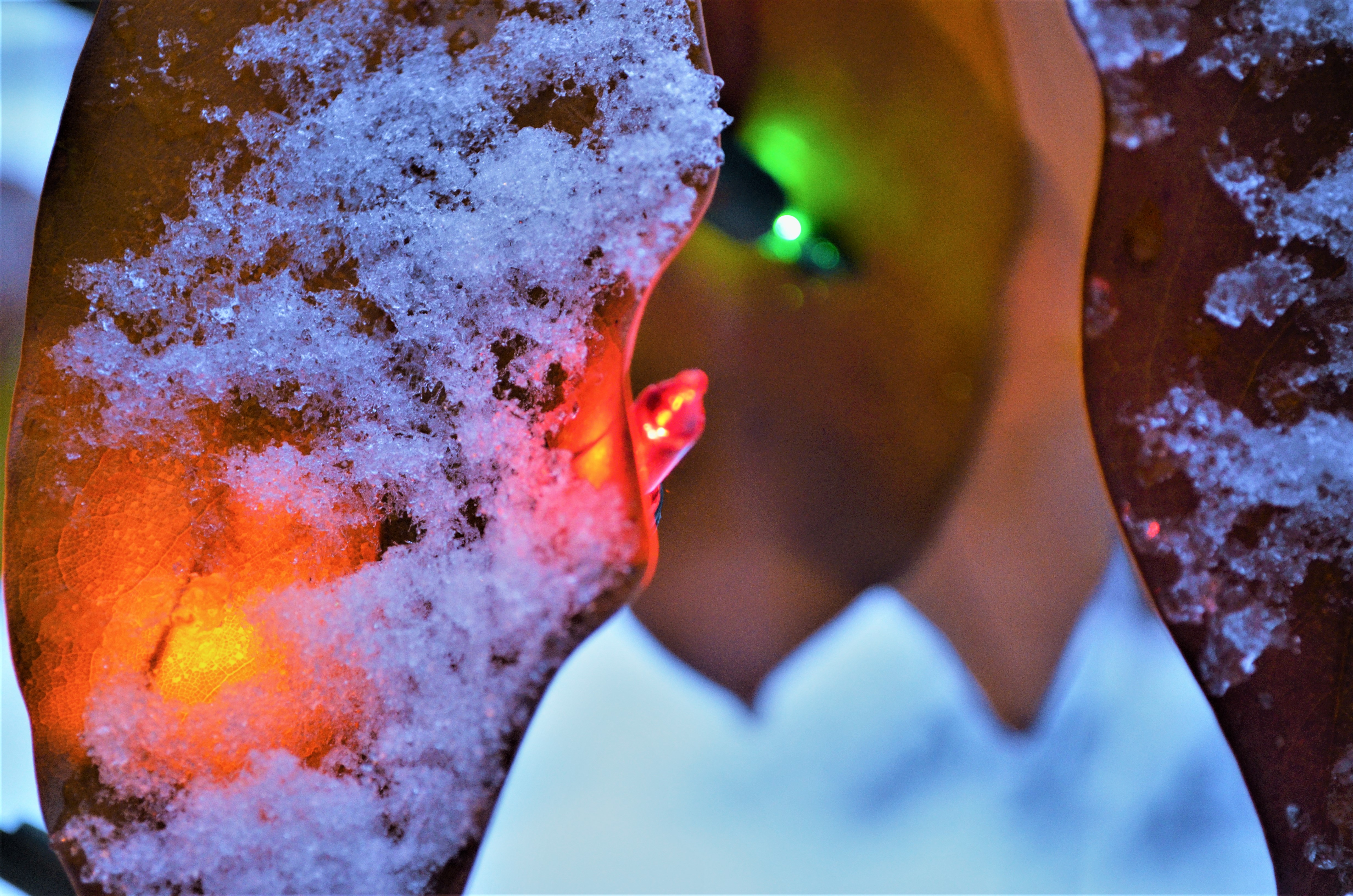

 PARTICLES to WAVES
Leave a comment